Posts

On-Prem Docker Deployment — Step-by-step

Image
On-Prem Docker Deployment — Step-by-step Author- Vikramsinh Shinde date - 2-Dec-2025 Audience:  Developers / DevOps engineers with basic Linux and Docker knowledge. Objective: Deploy a simple web service using Docker and Docker Compose on an on-prem Linux server and document every step used in blog/tutorial. 

Deployment on AWS EKS CLUSTER – Step-by-Step Guide

Image
  Deployment on AWS EKS CLUSTER – Step-by-Step Guide Author: Vikramsinh Shinde Date: December 1, 2025

Deployment Automation with GitHub Action

Image
 πŸš€ Automating Deployment with GitHub Actions: A Complete GuideπŸ’ͺπŸ’¬

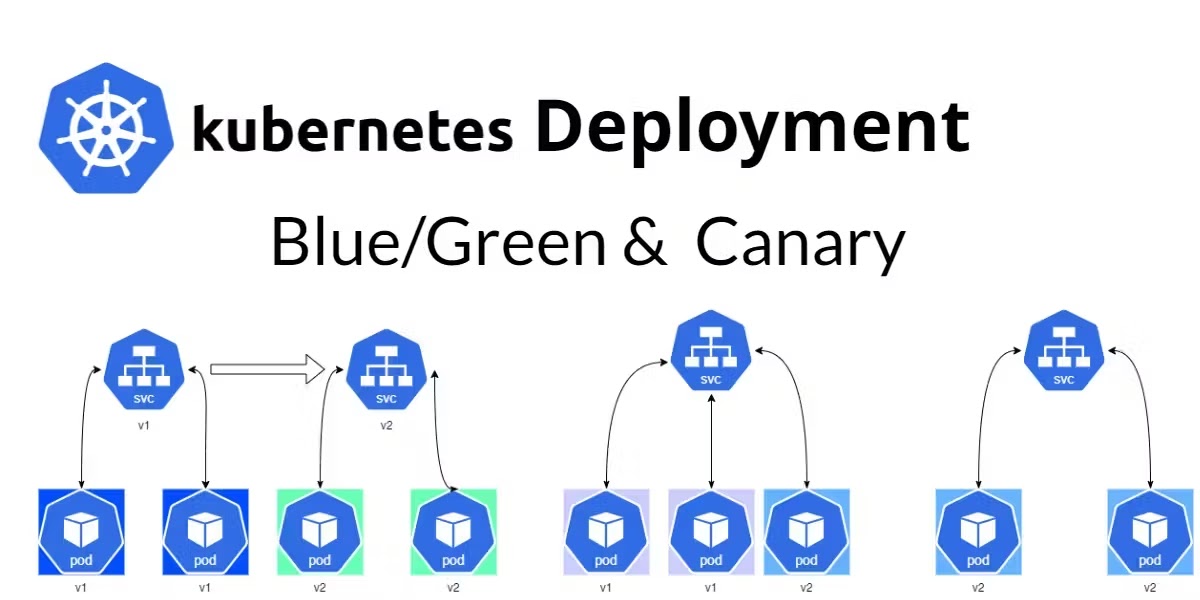
Kubernetes Deployment Strategies -Blue/Green, Canary, Rolling Updates with Yaml code

Image
  Kubernetes Deployment Strategies : A Complete Guide ================================================ ================================================ Kubernetes has revolutionized application deployment, making it easier to manage, scale, and roll out new versions. However, choosing the right deployment strategy is crucial to minimize downtime and ensure a smooth transition between application versions. In this blog, we will explore the most common Kubernetes deployment strategies: Blue-Green Deployment, Canary Deployment, and Rolling Updates . ================================================ 1. Blue-Green Deployment What is Blue-Green Deployment? Blue-Green Deployment is a strategy that involves maintaining two separate environments, Blue (current version) and Green (new version) . The idea is to deploy a new version in the Green environment while keeping the Blue environment live. How It Works? The Blue environment serves live traffic. A new version is deployed in the ...

Devops Project by Using Docker Swarm, Git, GitHub, and Jenkins.

Image
Docker Swarm, Git, GitHub, and Jenkins Project  Building and Deploying a Project Using Docker Swarm, Git, GitHub, and Jenkins ============================================================== Mastering Docker Swarm: Deploying a Scalable Project In today’s fast-paced DevOps-driven world, container orchestration plays a pivotal role in ensuring applications are deployed and managed effectively. Docker Swarm, Docker’s native clustering and orchestration tool, is one of the most robust and user-friendly solutions for managing containerized applications. In this blog, we’ll take you through a Docker Swarm project that demonstrates how to deploy a scalable application using Docker Swarm clusters. 1. What is Docker Swarm? Docker Swarm is an orchestration tool that allows you to manage a cluster of Docker hosts as a single virtual system. It simplifies container deployment, scaling, and management while ensuring high availability and load balancing for your applications. Key features of ...
Image
  Essential Linux Commands for System Administrators Linux is at the heart of many enterprise-level systems, making it crucial for system administrators to master its commands. Whether you're troubleshooting servers, managing networks, or automating tasks, understanding and using the right commands can significantly boost efficiency and reliability. This blog explores the most frequently used and essential Linux commands for system administrators. Frequently Used Linux Commands 1. Navigating the Filesystem ls : Lists directory contents. ls -l # Long listing with details ls -a # Includes hidden files cd : Changes the directory. cd /var/log cd ~ # Navigate to the home directory pwd : Displays the current working directory. pwd 2. File and Directory Management mkdir : Creates a new directory. mkdir backups rm : Removes files or directories. rm file.txt # Delete a file rm -r directory_name # Delete a directory cp : Copies files or directories. cp ...

Corporate CI/CD Pipeline

Image
Corporate CI/CD Pipeline with Docker, Jenkins, and Nexus Repository In today's fast-paced software development landscape, continuous integration and continuous deployment (CI/CD) have become essential for delivering high-quality applications efficiently. Recently, I embarked on a project to implement a CI/CD pipeline for a web application using Docker, Jenkins, and Nexus Repository. This blog outlines the journey, technical steps, and lessons learned along the way. Project Overview The objective of this project was to containerize a Java-based web application, automate the build and deployment processes, and make the application portable across various environments. To achieve this, I: Created a custom Docker image based on the vikramsinhshinde/devops:test-1 image. Integrated Jenkins to automate the build, test, and deployment workflows. Used Nexus Repository to store and manage application artifacts. Deployed the Dockerized application on different environments, ensuring...